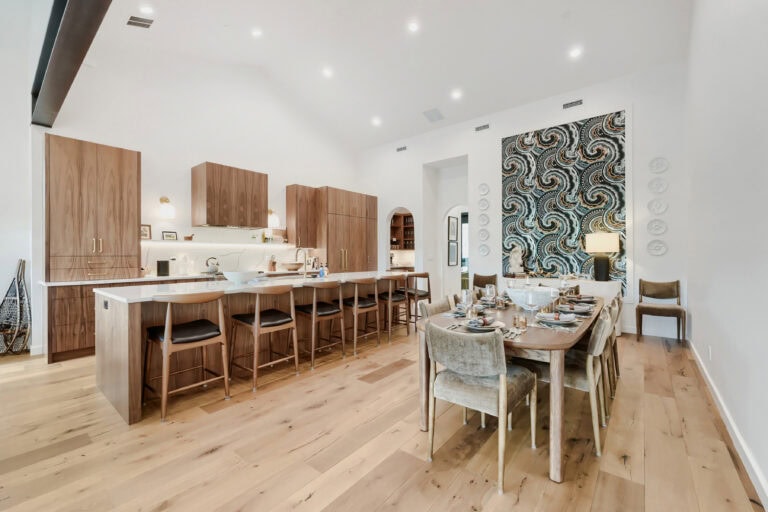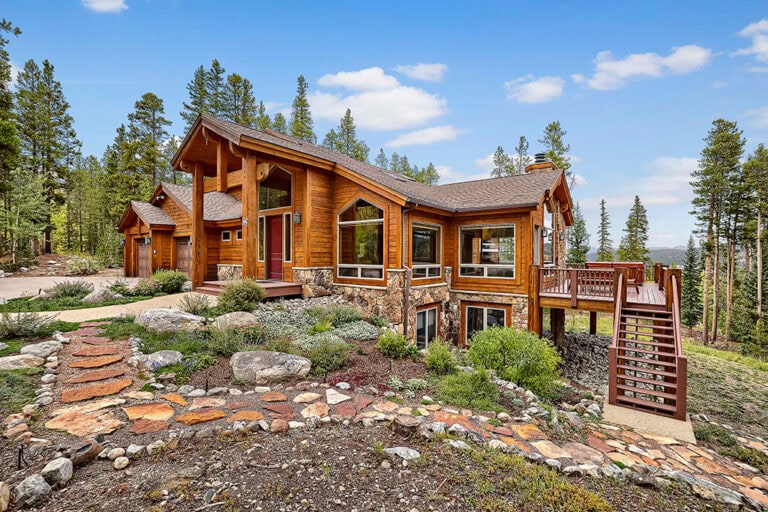
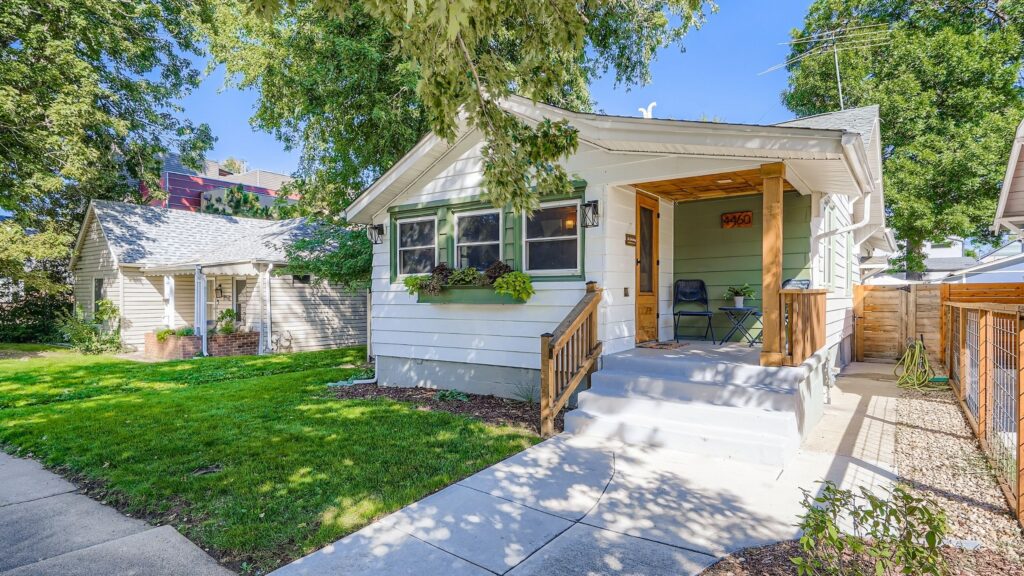



To help you speak confidently with clients and elevate your property marketing, we have broken down the vast landscape of American residential design into seven distinct architectural eras.
- Colonial,
- Folk/Vernacular,
- Romantic,
- Victorian,
- Eclectic,
- Modern, and
- Neo-Eclectic.
The seven pillars of American home design
1. The Colonial Era (1600s – 1800s)
Rooted in early European settlement, Colonial architecture is defined by rigid symmetry, balanced proportions, and formal layouts. These homes are typically multi-story, rectangular structures featuring evenly spaced windows anchored around a prominent front entrance.
- Sub-Categories to Know: Dutch Colonial, Georgian, Federal, Spanish Colonial, Saltbox.
- Signature Elements: Centered front doors, paired windows flanking the entryway, brick or clapboard siding, and uniform rooflines.
- Copywriting Strategy: Focus your copy on the property’s enduring heritage, balanced proportions, and traditional elegance.
2. Folk & Vernacular Design (1800s – Present)
Vernacular architecture describes homes constructed by local builders using readily available regional materials. Rather than following high-fashion architectural trends, these properties prioritize functional floor plans tailored to survive local climates and geographies.
- Sub-Categories to Know: Classic Log Cabins, Southern Cracker Homes, Shotgun Houses, Traditional Gable Fronts.
- Signature Elements: Wrap-around covered porches for natural cooling, local timber or stone accents, and straightforward, utilitarian floor plans.
- Copywriting Strategy: Highlight the property’s organic character, structural simplicity, and historical authenticity.
3. The Romantic Movement (1820s – 1880s)
Breaking away from the strict geometry of Colonial styles, the Romantic movement embraced European flair, whimsical shapes, and an integration with natural landscapes. These homes frequently showcase grand decorative statements and dramatic architectural features.
- Sub-Categories to Know: Greek Revival, Gothic Revival, Italianate.
- Signature Elements: Soaring entry columns, steeply pitched gables, pointed arch windows, and elaborate roof brackets.
- Copywriting Strategy: Appeal to emotional buyers by highlighting dramatic curb appeal, romantic design flourishes, and statuesque presence.
4. The Victorian Era (1860s – 1900s)
Driven by the industrial revolution’s manufacturing boom, Victorian homes abandoned simplicity in favor of elaborate ornamentation. These properties are famous for their asymmetrical layouts, multi-textured surfaces, and vibrant color palettes.
- Sub-Categories to Know: Queen Anne, Second Empire, Romanesque Revival.
- Signature Elements: Multi-story turrets and towers, intricate woodwork (often called “gingerbread trim”), textured shingle patterns, and sprawling porches.
- Copywriting Strategy: Frame the listing around masterful craftsmanship, fairy-tale aesthetics, and well-preserved historic details.
5. The Eclectic Era (1880s – 1940s)
During this period, architects began blending distinct historical movements from across the globe, focusing heavily on specialized masonry, artisan woodwork, and localized revivals.
- Sub-Categories to Know: Craftsman Bungalows, Tudor Revival, Spanish Colonial Revival, Beaux-Arts.
- Signature Elements: Exposed structural beams and built-in built-ins (Craftsman), decorative exterior half-timbering (Tudor), or smooth stucco paired with clay tile roofs (Spanish).
- Copywriting Strategy: Emphasize artisan-level building quality, distinct personality, and architectural integrity.
6. The Modern Movement (1900s – 1970s)
Modernism completely rejected historical imitation, choosing instead to focus on minimalist design, industrial materials, and open spaces. The core philosophy here is that a home’s layout should serve the lifestyle of its inhabitants, stripping away unnecessary embellishments.
- Sub-Categories to Know: Mid-Century Modern, Ranch, Prairie School, Art Deco.
- Signature Elements: Floor-to-ceiling glass walls, flat or low-sloping rooflines, expansive open-concept layouts, and an emphasis on indoor-outdoor living.
- Copywriting Strategy: Capture the massive demand for minimalist luxury, sun-drenched interiors, and iconic retro aesthetics.
7. Neo-Eclectic Design (1960s – Present)
This category represents the standard for modern suburban home building. Instead of adhering strictly to one historic design language, Neo-Eclectic homes freely mix elements from different eras to create functional, large-scale spaces tailored for modern family living.
- Sub-Categories to Know: Neo-Colonial, Neo-Traditional, Contemporary Craftsman, Neo-Mediterranean.
- Signature Elements: Multi-tiered rooflines, mixed exterior facades (combining stone veneer, vinyl, and brick), prominent forward-facing garages, and sprawling multi-zone interiors.
- Copywriting Strategy: Position these listings as offering the ideal blend of classic design inspiration and 21st-century luxury convenience.
Architectural marketing cheat sheet
When preparing your marketing materials, matching your vocabulary to the home’s specific style can transform a basic listing into a compelling narrative. Use this quick matrix to guide your writing for your listing descriptions:
| Architectural Style | High-Impact Descriptors | Sample Copy Snippet |
| Colonial | Stately, Balanced, Timeless, Regal | “An impeccable showcase of stately Georgian symmetry and timeless curb appeal.” |
| Victorian | Whimsical, Ornate, Majestic, Elaborate | “Fall in love with this ornate Queen Anne Victorian, featuring a signature turret and majestic woodwork.” |
| Craftsman | Artisan, Built-in, Warm, Handcrafted | “This handcrafted Craftsman bungalow welcomes you with warm wood tones and exquisite custom built-ins.” |
| Modern | Sleek, Minimalist, Fluid, Expansive | “Embrace fluid indoor-outdoor living in this sleek mid-century modern masterpiece featuring expansive walls of glass.” |
Bring your property’s architecture to life
Identifying the architectural style of a home is only the first step; capturing its essence visually is what secures the showing. Whether you are marketing a stately Colonial or a sleek, minimalist Modern build, high-resolution photography, aerial drone footage, and interactive 3D tours are crucial to showcasing those architectural highlights to buyers.
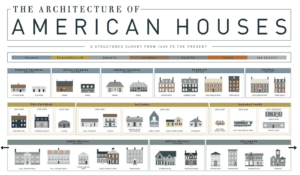
Looking to sharpen your property identification skills? Consider adding The Architecture of American Houses print by Pop Chart to your office. It serves as a beautiful visual cheat sheet whenever you are crafting your next property description.
Trust Virtuance to capture your listing architectural style
Whether your listing boasts the stately symmetry of a historic Colonial or the crisp, minimalist lines of a Mid-Century Modern, Virtuance is equipped to capture its unique architectural narrative. Our comprehensive listing products and services—combining professional photography, aerial drone footage, immersive 3D virtual tours, and more real estate media solutions—ensure that every structural detail shines exactly as the architect intended.
Ready to transform your listing into a high-converting visual experience? Order your Virtuance media solutions package today!