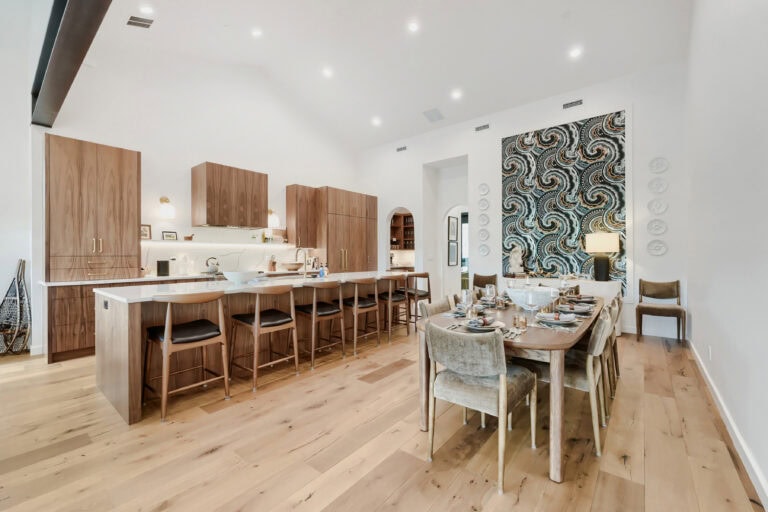
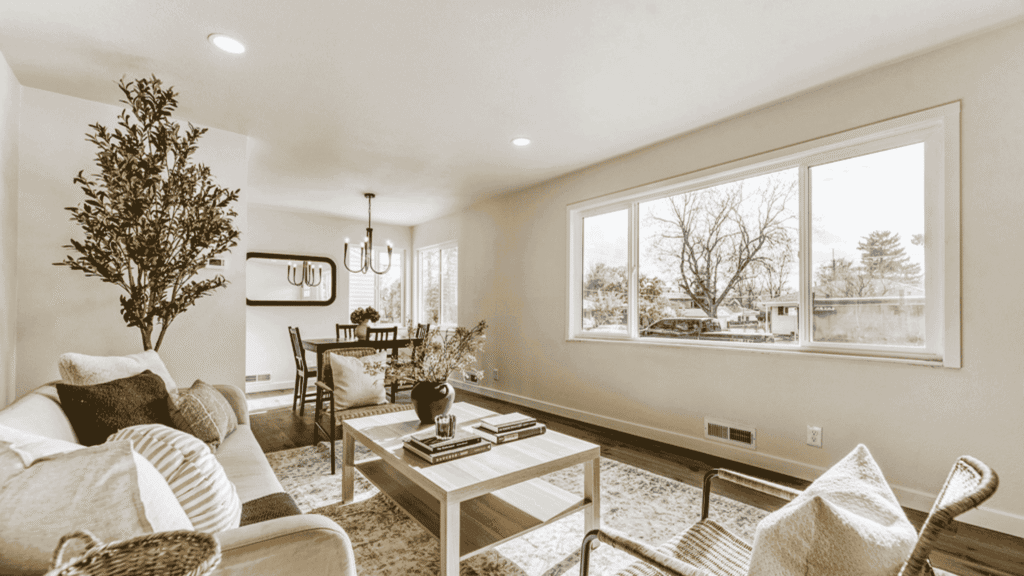



Key Takeaways
- Virtual staging for homes costs 85–95% less than traditional staging, with turnaround times as short as 24 hours.
- Traditional staging can increase final sale price by 1–5%, but upfront costs frequently cancel out that gain on mid-priced listings.
- Choosing between the two methods comes down to listing type, price point, and seller timeline; and combining both is often the strongest play.
Staging sells homes, but not all staging is created equal. A strategy that makes perfect sense for a $900,000 luxury listing can quietly drain ROI on a $350,000 townhome. Virtual staging has changed the math for agents across every price point, yet traditional staging still earns its place when the situation calls for it. What follows is an honest, data-backed look at both methods: what they cost, what they return, and exactly when to use each one.
What is virtual staging in real estate?
At its core, virtual staging is digital furnishing. Editors take raw photos of an empty room and use specialized software to add furniture, lighting, rugs, art, and décor that look photographically realistic. No trucks, no moving crews, no staging fees that compound month over month.
The finished images arrive as high-resolution listing photos, typically within 24 to 48 hours. Buyers browsing online see a fully realized, livable space rather than a blank canvas they have to mentally fill themselves. That shift in perception is the entire point.
What is traditional home staging?
Traditional staging brings real furniture and real professionals into the property. A stager evaluates the home, curates furnishings from inventory or rental vendors, coordinates delivery, and physically arranges everything to maximize buyer appeal. For occupied homes, that process often focuses on editing and rearranging what is already there. For vacant properties, it means furnishing the space from scratch.
The experience is tangible. Buyers who walk through a traditionally staged home feel the warmth and scale of a real environment, not just pixels on a screen. That sensory quality is exactly what makes traditional staging worth the investment in the right context—and an expensive overcorrection in the wrong one.
How do virtual and traditional staging costs compare?
The cost difference is not marginal. It is structural. Understanding where the money actually goes in each model helps agents guide sellers toward a decision rooted in real economics rather than assumption.
2026 staging cost comparison
| Factor | Virtual Staging | Traditional Staging |
| Cost per room | $15 – $150 | $500 – $1,500 |
| Full listing (4–6 rooms) | $75 – $600 | $2,000 – $5,000+ |
| Monthly furniture rental | Not applicable | $500 – $2,000/month |
| Setup and labor | None | $300 – $800 |
| Turnaround time | 24 – 48 hours | 3 – 7 business days |
| Revisions or changes | $15 – $50 per photo | Full re-staging required |
| Vacant home use | Yes | Yes |
| Occupied home use | Yes, with decluttered source photos | Yes |
| Optimized for online listings | Yes | Requires reshooting after staging |
Cost ranges sourced from Styldod, VirtualStaging.com, HomeGuide, HomeAdvisor, Angi, and Bankrate; figures reflect 2025–2026 industry averages and will vary by market and provider.
Here is where that plays out practically: a vacant four-bedroom home staged the traditional way typically runs $3,000 to $5,000 to set up, with monthly rental fees layered on top until it sells. The same home staged virtually might cost anywhere from $250 to $450, paid once and dependent on how many images you’re staging. No renewals, no retrieval fees, no scheduling conflicts when the listing finally goes under contract.
Which staging method delivers better ROI?
ROI in staging is not just about whether a home sells for more. It is about what you net after accounting for every dollar spent to get there.
What the data shows
The National Association of Realtors’ Profile of Home Staging found that 83% of buyers’ agents reported staging made it easier for their clients to visualize a property as their future home. Staged listings also sold for 1–5% more than comparable unstaged properties. Those are meaningful numbers but context matters.
Take a $400,000 listing. A 1% sale price increase generates $4,000. If traditional staging cost $4,500 upfront, the listing needs to sell in the first month just to break even. Miss that window, and every week the furniture rental chips away at what little margin remains.
Virtual staging, delivering the same buyer-facing visual benefit for roughly $300 (on the pricier end), leaves that $4,000 gain largely intact.
Side-by-side ROI example
| Scenario | Traditional Staging | Virtual Staging |
| Listing price | $400,000 | $400,000 |
| Estimated sale price lift (1%) | +$4,000 | +$4,000 |
| Staging investment | -$4,500 | -$300 |
| Net ROI impact | -$500 | +$3,700 |
This scenario assumes a 30-day sale. Each additional month of market time makes the traditional staging outcome worse.
A luxury case
Luxury listings above $750,000 operate under different economics. At that price point, the staging cost is a smaller percentage of the transaction, buyers expect a premium in-person experience, and the incremental sale price lift can genuinely offset the expense. The math changes—and so should the recommendation.
How long does each method take to get a listing market-ready?
Days on market before going live carry real costs: carrying costs for the seller, lost momentum in a competitive season, and buyer attention that has already moved on to the next property. Speed is not just a convenience, it is a financial variable.
- Virtual staging delivers edited photos within 24 to 48 hours. There is nothing to schedule, no delivery window to wait on, and no installation to coordinate around a seller’s schedule. Many times, virtual staging can actually be ordered with your photoshoot, so you get all the deliverables at the same time.
- Traditional staging requires sourcing inventory, arranging delivery logistics, and physically setting up the space. Under normal conditions, that process takes 3 to 7 business days. Peak listing seasons can stretch that further.
For sellers who need to move quickly, virtual staging is not just faster, it removes an entire category of delay from the process.
Do virtually staged homes sell faster?
Staged properties across both methods significantly outperform unstaged ones. RESA’s research shows that professionally staged homes sell 73% faster than their non-staged counterparts. The more pointed question for agents today is whether virtual staging specifically carries that same momentum.
Evidence suggests it does, and the reason is straightforward: 95% of buyers start their search online, according to NAR. Those buyers make subconscious decisions about a listing before they ever schedule a tour. Furnished rooms read as larger, warmer, and more livable than empty ones. They generate more clicks, more saves, and more showing requests—which is exactly what drives faster sales.
One honest caveat: Buyer will walk into an empty home
Buyers who fall in love with the listing photos will walk into an empty house. That gap between expectation and experience needs to be managed transparently. Clear disclosure on MLS listings, along with thoughtful framing by the agent during the showing, keeps that transition smooth. Well-disclosed virtual staging rarely derails a motivated buyer.
Agent tips
- Pair virtually staged listing photos with a 3D tour or floor plan to give buyers spatial context for the empty space they will actually walk through. The combination closes the perception gap more effectively than photos alone.
- You can also print the virtually staged images on a posterboard and have them displayed in the corresponding room during tours and open houses. This helps buyers better connect the dots of what they saw online, to what they are seeing in person.
What are the disadvantages of virtual staging?
Balanced decisions require knowing the full picture. Virtual staging is the right tool in most situations, not all of them.
- The in-person reality check. Buyers who loved the listing photos arrive to find empty rooms. Without thoughtful setup on the agent’s part, this moment can deflate enthusiasm. Transparency in the listing and during the tour is non-negotiable.
- Disclosure requirements. Most MLS systems require virtual staging to be labeled as such. Presenting staged images without disclosure is not just an ethical problem—it can create liability.
- Photo quality dependency. The final virtual staging is only as strong as the source photography. Poorly lit, low-resolution originals produce unconvincing results regardless of the editing software used.
- No sensory dimension. Scent, warmth, spatial flow—none of that translates through a screen. Buyers who rely heavily on the physical experience of walking through a home may not respond to virtual staging the same way.
- Limited fit for luxury markets. High-net-worth buyers and their agents often expect a curated physical environment, and the absence of one can read as a lack of investment in the listing presentation.
Knowing these limitations is not a reason to avoid virtual staging. It is a reason to deploy it strategically.
When should you use virtual staging vs. traditional staging?
Run through this checklist before making the call on any listing.
Choose virtual staging when:
- The property is vacant and needs to show well in online search results
- The listing price is under $600,000 and profit margins are a real consideration
- Photos need to be ready within 48 hours to hit a listing deadline
- The seller cannot absorb a $3,000–$5,000 pre-sale staging investment
- You are marketing a rental unit between tenants
- Multiple design options for the same space would help attract different buyer profiles
- The listing is in a market where online search drives the majority of showing activity
Choose traditional staging when:
- The listing is priced above $750,000 and the buyer pool expects a premium showing experience
- Inventory is low and in-person first impressions are a significant competitive differentiator
- Open house volume will be high and the physical environment needs to perform
- The property has architectural complexity that benefits from physical guidance — unusual layouts, low ceilings, awkward proportions
- Seller timeline allows the 3–7 day setup window without affecting the list date
Consider using both when:
- Physical staging covers the primary living spaces and virtual staging handles secondary rooms
- The listing is going live before physical staging can be completed
- You want to present alternate design concepts to buyers beyond what the physical staging shows
Virtual staging works for every listing—including rentals
Most staging conversations focus exclusively on homes for sale, but rental listings are one of the biggest missed opportunities in the market. Vacant units cost owners money every day they sit empty, and traditional staging makes no financial sense in that context. Spending $2,000 to $5,000 to furnish a unit renting for $1,800 a month is not a strategy—it is a loss.
Virtual staging solves this directly: for $150 to $400, a vacant unit presents online as fully furnished and move-in ready, generating the clicks and inquiries that fill a leasing calendar fast. Property managers with multiple units in the same building can take it further, staging each unit in a different design style from a single photo shoot — something physical staging cannot match at any price.
So, is virtual staging worth the investment?
The broader takeaway applies to every listing type. Virtual staging earns its place as the default for most properties: it is faster, dramatically less expensive, and built for the online-first environment where nearly all buyer and renter journeys begin. Traditional staging still wins where it matters—luxury properties, competitive open house markets, and situations where a curated in-person experience drives the decision. The agents who consistently get the best outcomes are the ones who treat staging as a deliberate, listing-by-listing call rather than a habit.
Understanding the economics of both methods, knowing when to use each, and recognizing where they work best together is one of the clearest advantages an agent can build. For more guidance on making the right staging call for any listing, this breakdown on whether to stage your listing is a useful next step.
Make every listing look its best with Virtuance
Whether a listing is traditionally staged and ready for its close-up, or an empty space that needs virtual staging to come to life online, Virtuance delivers professional real estate photography built for exactly these moments.
Virtuance also offers virtual staging services designed to work seamlessly alongside professional photography, giving agents one trusted partner for the full visual package. New clients save $50 on their first order with code NEWCLIENT50, and Virtuance’s pay-at-close option means there is nothing due until the listing sells. Order today at virtuance.com.
People also ask
Do virtually staged homes sell faster?
Staged homes sell 73% faster than unstaged ones on average. Furnished listing photos generate significantly more clicks and showing requests than empty-room photos.
What are the disadvantages of virtual staging?
Virtual staging requires MLS disclosure and creates a gap between online photos and an empty in-person showing. It also delivers less impact for luxury buyers who expect a physically staged environment.
Do realtors use virtual staging?
Yes. Virtual staging now serves as a primary listing tool for agents across price points and market types. Agents using professional media companies get the most consistent, buyer-ready results.
How much does virtual staging cost per photo?
Professional virtual staging typically costs $15 to $150 per photo. A full listing runs $75 to $600, versus $2,000 to $5,000 for traditional staging.
How does Matterport compare to virtual staging?
Matterport delivers 3D walkthroughs that show buyers a property’s full layout and flow. Virtual staging enhances still photos to show how rooms look furnished—the two work best together.