5 strategic steps to sell luxury real estate
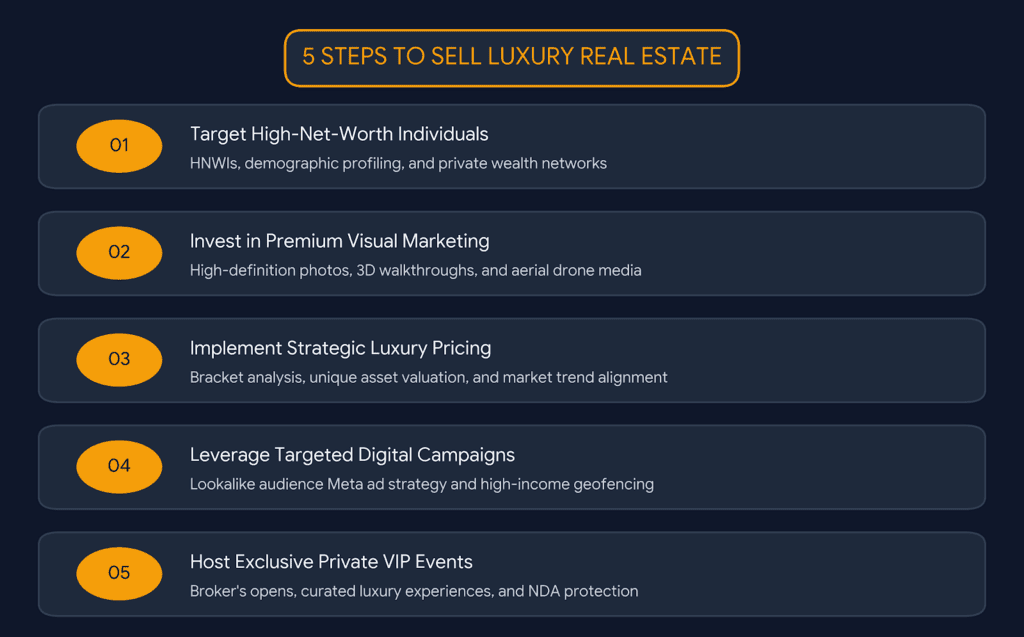
Step 1: Target high-net-worth individuals (HNWIs) & demographic profiles
To sell a high-end property, a luxury real estate agent must first understand who the potential buyer is. Today’s luxury demographic includes seasoned investors, corporate executives, tech entrepreneurs, and affluent remote professionals.
How to reach affluent buyers:
- Develop Precise Buyer Personas: Identify whether the home appeals to a family seeking top school districts, an international buyer looking for a secondary vacation home, or an investor seeking luxury architectural inventory.
- Engage Private Networks: Partner with wealth managers, luxury concierge services, family offices, and private banking channels.
- Leverage Brokerage Networks: Align with an established luxury real estate agency or global affiliate network like Sotheby’s International Realty or RE/MAX Luxury to gain cross-border exposure.
Step 2: Invest in premium visual marketing (luxury photos, 3D tours & drone media)
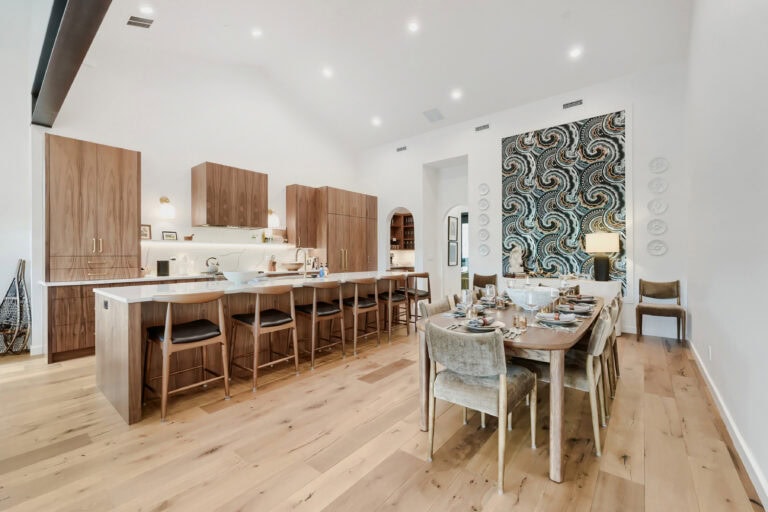
Standard listings might get by on snapshot photos alone. However, luxury sellers expect full financial and creative investment in listing media. High-end staging and immersive visual tools are non-negotiable for converting out-of-market buyers.

Key visual assets for luxury listings:
- High-Definition Photography: Crisp interior and twilight photography showcasing high-end finishes.
- 3D Virtual Walkthroughs: Interactive floor plans letting remote buyers explore every room seamlessly.
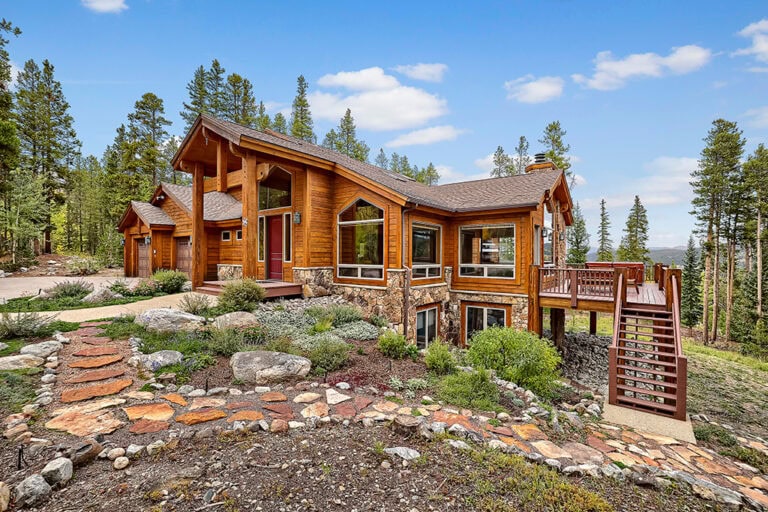
- Aerial Drone Videography: Highlighting property boundaries, outdoor amenities, surrounding geography, and privacy features.
- Custom Single-Property Websites: Dedicated landing pages hosting high-resolution video tours, floor plans, and story-driven property descriptions.
Virtuance combines professional real estate photography with product certified local photographers to give luxury listings a competitive edge.
Step 3: Implement strategic luxury pricing models
Pricing high-end real estate is both an art and a science. Overpricing a home causes it to sit on the market, creating a perception of defect among discerning buyers. Conversely, underpricing can signal a lack of exclusivity.
Effective luxury pricing strategies:
- Conduct In-Depth Bracket Analyses: Analyze hyper-local comparable sales, pending listings, and expired properties in the top price brackets.
- Evaluate Unique Property Valuations: Account for irreplaceable assets such as waterfront acreage, historic provenance, custom architectural builds, or master-planned security features.
- Adjust for Market Trends: Factor in active interest rate environments, regional wealth migrations, and economic shifts affecting luxury real estate news and buyer liquidity.
Step 4: Leverage meta ads & targeted digital lead generation strategy
Yard signs and newspaper ads rarely reach high-net-worth buyers. Modern luxury brokerages rely heavily on targeted digital marketing alongside traditional networking.
Meta ads on Facebook and Instagram allow you to showcase photo galleries, video tours, or interactive carousels. The real advantage comes from Meta’s lookalike audience targeting feature.
A lookalike audience finds new people who match your best clients.
- How it works: You upload a list of past luxury buyers or high-value leads. Meta analyzes their shared traits, interests, and online habits.
- The result: Meta finds new users who fit that exact high-net-worth profile. This ensures your ad budget reaches serious prospective buyers who mirror your ideal clientele.
Digital campaign optimization tips:
- Target High-Income Radius Zip Codes: Geofence affluent neighborhoods, private golf clubs, luxury marina districts, and executive airports.
- Incorporate High-End Retargeting: Retarget prospective buyers who spend more than 60 seconds viewing your listing’s custom single-property website or watching over 50% of your video tour.
- Leverage Video Lifestyle Ads: Showcase the lifestyle experience of living in the home—such as enjoying sunset mountain views, entertaining in chef-grade kitchens, or relaxing poolside.
Step 5: Host exclusive private VIP events instead of traditional open houses
Public open houses rarely attract qualified buyers. Instead, luxury marketing relies on exclusive broker’s opens and private VIP events as the industry standard. A broker’s open brings top-producing agents, luxury brokers, and wealth advisors directly to the property before public exposure.
How to execute a luxury listing event:
- Limit the guest list: Host exclusive broker’s opens for top luxury agents, wealth managers, and pre-vetted buyers.
- Curate high-end experiences: Partner with luxury brands to offer private wine tastings or exotic car displays that mirror the home’s lifestyle.
- Prioritize privacy and security: Require pre-registration and non-disclosure agreements to protect high-profile sellers.
Execute your luxury marketing strategy with precision
Selling high-end properties requires market intelligence, targeted digital campaigns, and an uncompromised commitment to premium visual media. Master these five steps to position your listings, attract qualified buyers, and dominate your local luxury real estate market.
To get started on some other marketing ideas, check out our article: Ideas for Luxury Real Estate Marketing
Elevate your luxury listing presentation with Virtuance
Virtuance delivers high-quality real estate media to help top agents stand out and win premium listings. Schedule your professional photography, drone media, and 3D virtual tour package today to showcase your property at its best. Order your luxury shoot with Virtuance today!